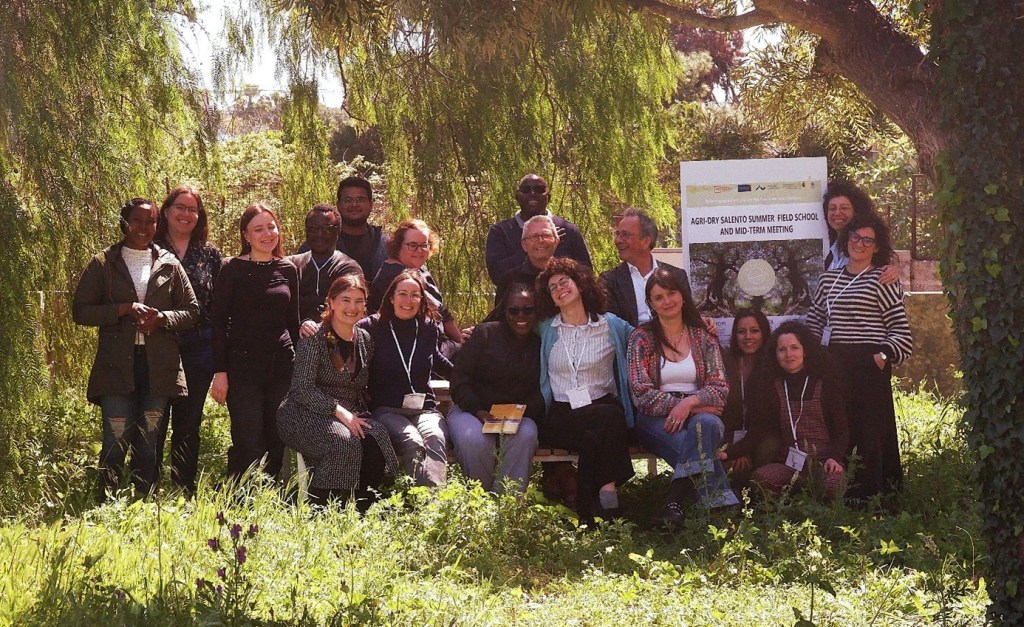
A magnificent week (April 7 to 11, 2025) of field trips, scientific training, and lively discussions in southern Italy is over, and I’m excited to share with you our group experience! I am Sara Krubeck, archaeologist, archaeobotanist and currently a doctoral candidate in the international AGRI-DRY doctoral network. Together with Sara Scaglia, I am based at the UPF in Barcelona, Spain, while our fellow doctoral candidates (DCs) are distributed across five further countries in Europe and Africa. The training school at the University of Salento in Lecce was the first in-person meeting of our research network, so everyone was very excited upon arrival. We DCs already met up on Sunday evening before the training school started—at a cozy Italian restaurant, so we could get to know each other informally over local cuisine. This cheerful evening of introductions and exchanging stories very much made up for the rainy welcome that the otherwise picturesque city of Lecce gave us that day.
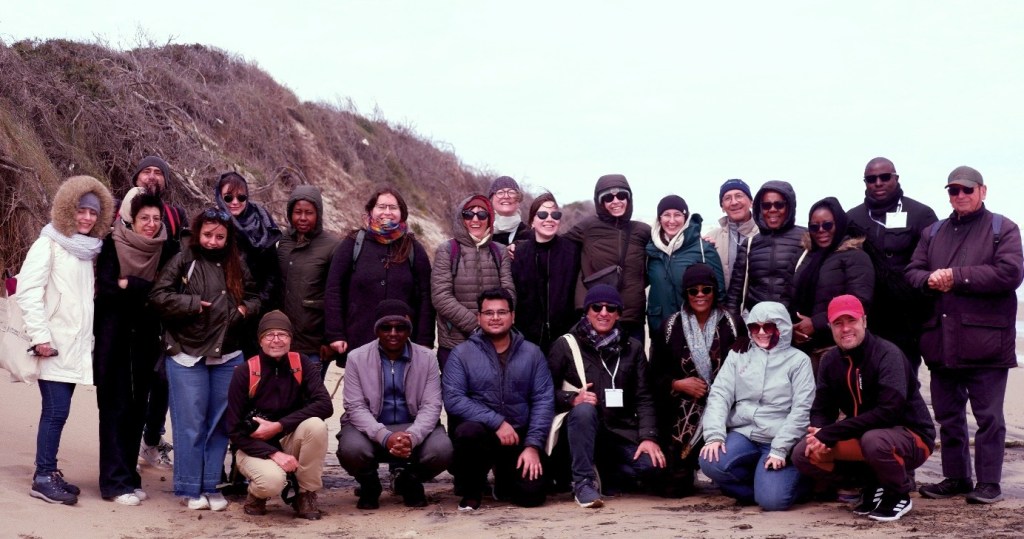
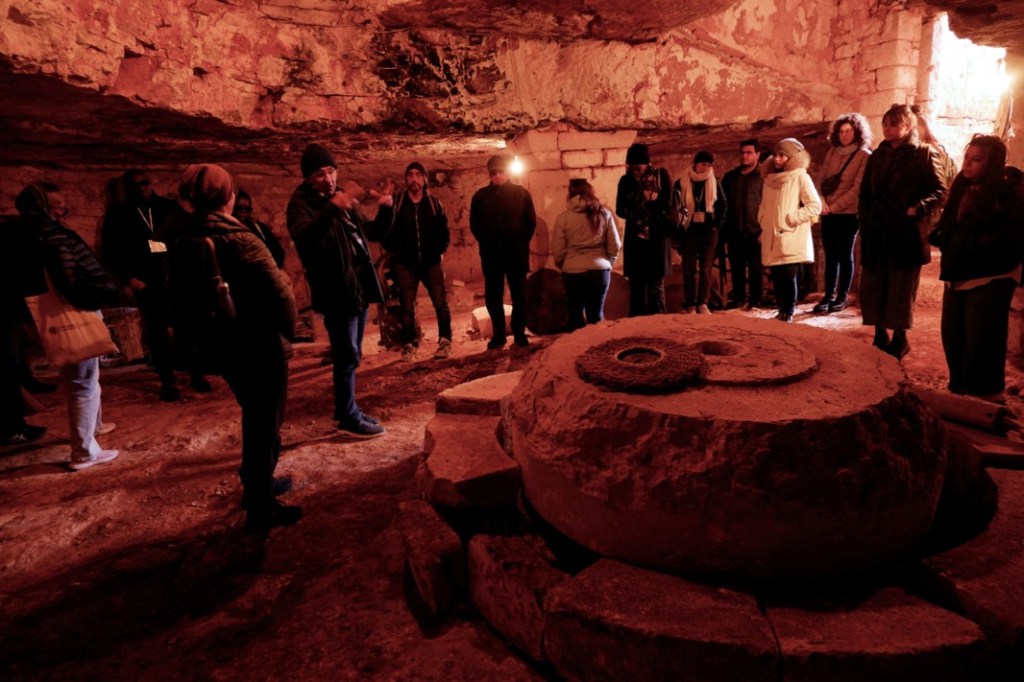
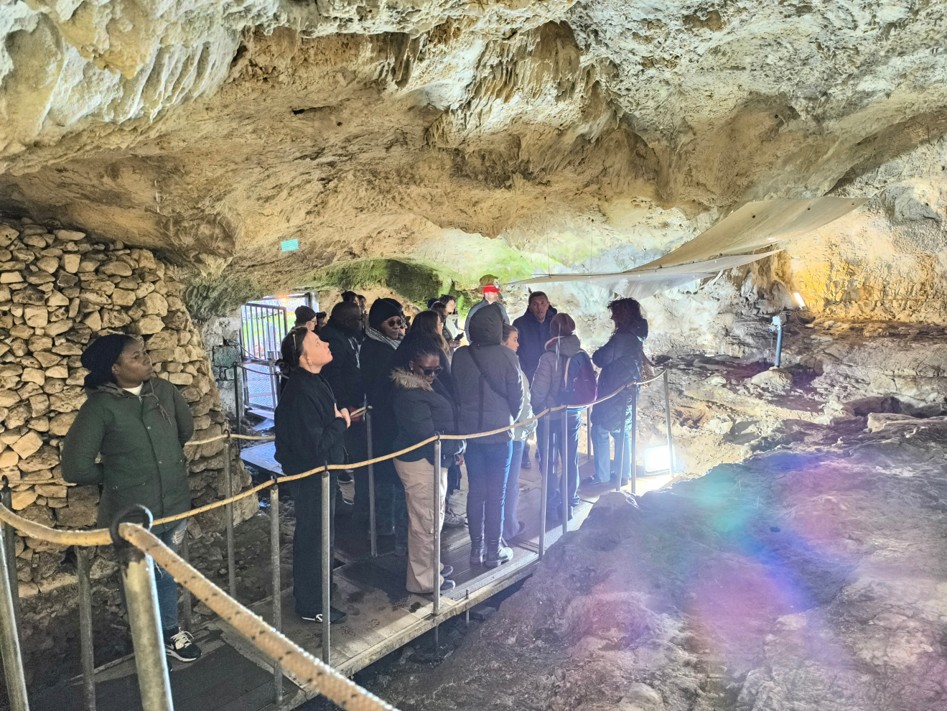
On Monday morning, everyone got their nametags and even a nice tote bag! Next to us DCs, our supervisors, project coordinators, and the local organizing team were present. The official meeting started with a welcome speech by the hosts, followed by a couple of lectures for Workshop 1, “Cultural Landscapes, Modelling, Land Use, Long-term Ecology & the Future”, in which the invited local speakers also gave us insights into the southern Italian context. In the afternoon, the first part of our 2-day field trip through the region of Apulia started: we explored different parts of the coast, defying the untypically cold and windy weather and discussing the karstic landscape with its anthropogenically altered vegetation. Our next destination was the ancient city of Castro, where we visited the remains of a Greek temple of Athena and the Roman city walls. The field trip continued on Tuesday with a visit to a protected natural area at the coast, where we walked along the dunes – green on the landside and alarmingly eroded on the seaside—with a beach full of waste washed ashore: “paleoplastics”, our guide called it, because some objects are decades old and neither in use nor in production anymore. The freshwater lakes just behind the dunes, we are told, were historically important for catching eels. Another vital resource of the region, of course, are olive groves. We therefore visited the “Millenary Olive Trees Park” to learn about historical oil extraction methods and landscape management. Our last destination, in the evening, was a cave with a Paleolithic burial and a Christian fresco from the 15th/16th century.
On Wednesday, our EU project officer joined us, as AGRI-DRY is largely funded by Horizon Europe through the MSCA (Marie Curie) grant. We had the chance to present our individual doctoral projects and received valuable tips and feedback. After this midterm meeting, we went on a guided tour of Lecce, with its many baroque facades and a Roman theater that is currently being excavated, and afterwards gathered all together for a network dinner. We spent the remaining two days, Thursday and Friday, in the archaeobotanical laboratory of the University of Salento for Workshop 2, “Introduction to Plant Macro-Remains and Phytolith Identification.” Next to the workshops, field trips, and the midterm meeting, we also used the nicely catered coffee and lunch breaks throughout the week to get in touch with other project members and exchange ideas. Towards the end, the weather was also finally agreeing with us calling the event “summer school”, so we even had lunch outside in the university garden on the final day, enjoying the sunshine. All in all, the week was eventful and sometimes exhausting but very rewarding. I am happy to see that we form such a brilliant research team, and I’m very much looking forward to the next AGRI-DRY network event. Many thanks to our coordinators Maria and Katie and the local organizing team for making this event such a positive experience!
Know more about Sara and her work here…
 AGRI-DRY