Written by – Kayla Mac Conachie
This September, I joined the excavation at Castellaccio di Lentini (Sicily) — an incredible experience uncovering traces of past communities while surrounded by olive trees, Mount Etna, and Sicilian sunsets.
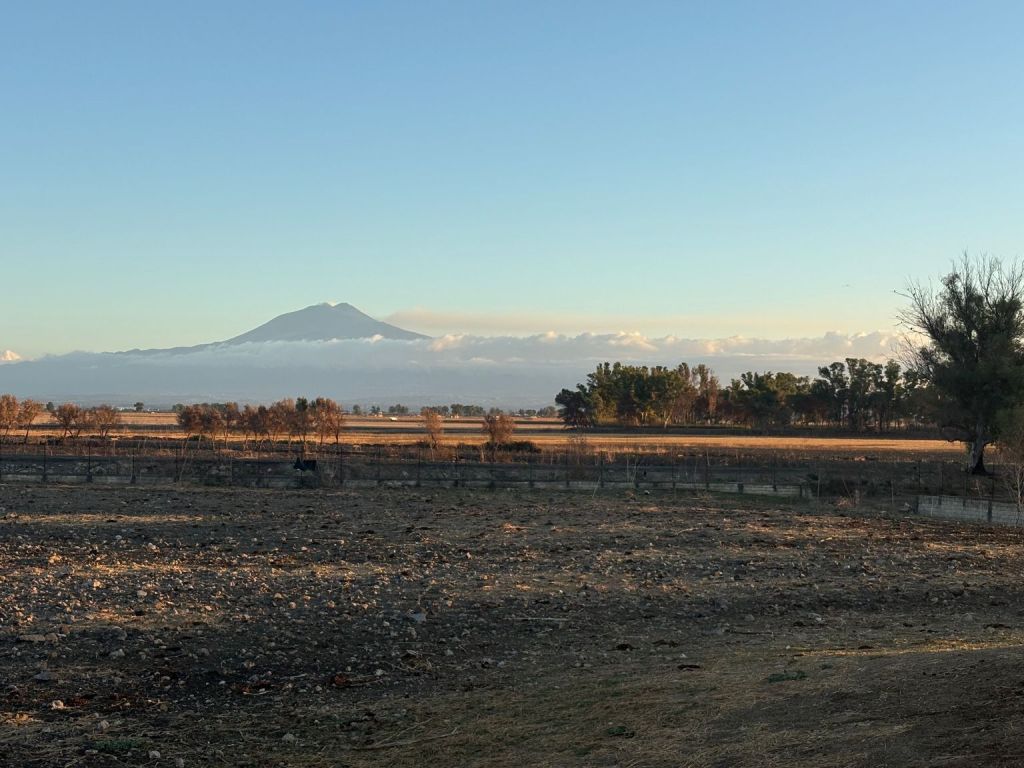
Mount Etna is around 70 km to the north of the excavation.
From early mornings under golden skies to evenings illuminated by the full moon, our days were filled with excavation, pottery washing, and flotation work, every moment revealed a small piece of the site’s history — from charcoal, bone and ceramic sherds to corroded metal finds. Each fragment tells part of the story of how people once lived, farmed, and adapted to their changing environment.
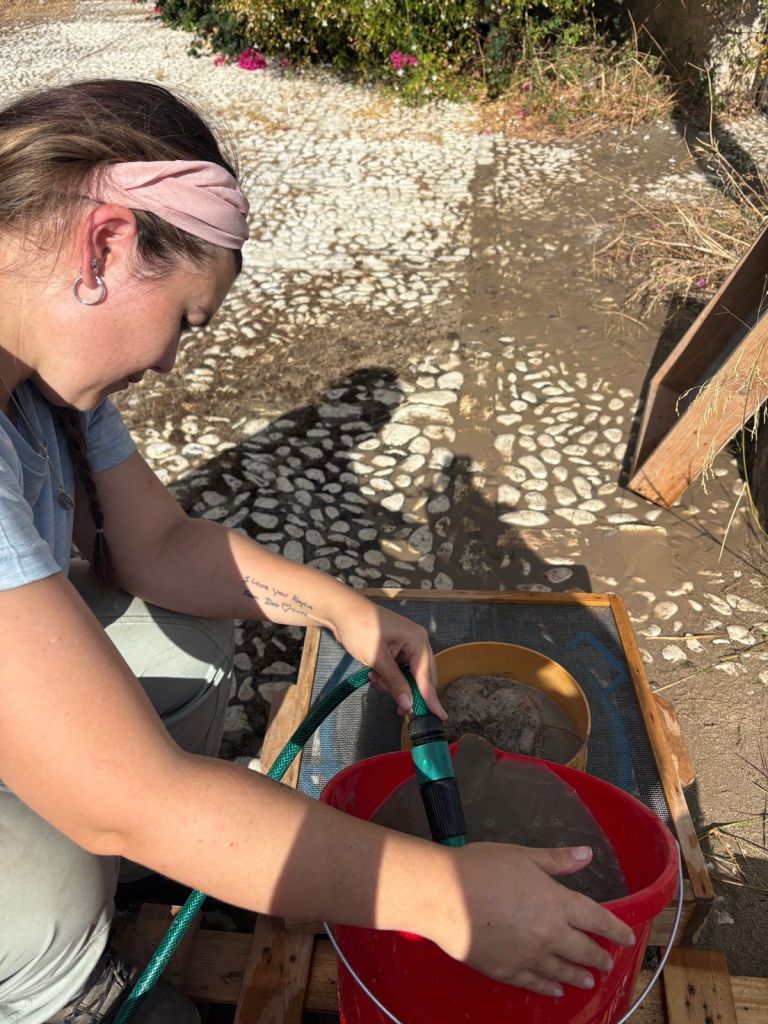
Kayla conducting flotation.
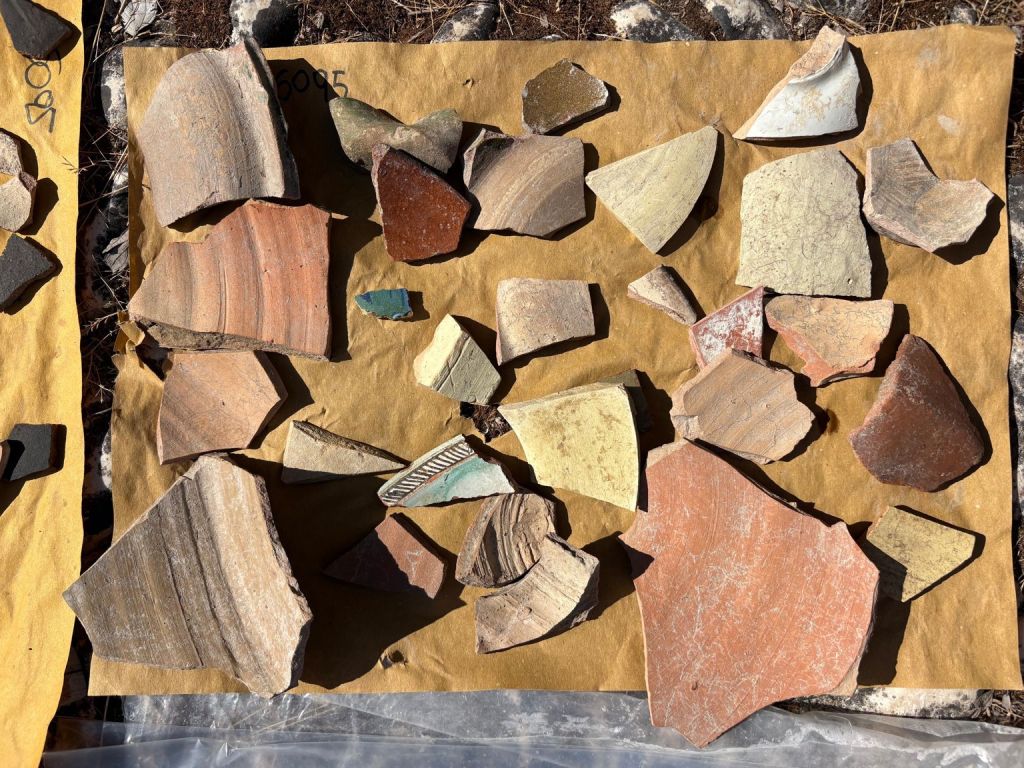
Ceramic sherds.
As part of AGRI-DRY, my research explores ancient agriculture and human–environment interactions in dryland regions. By combining archaeobotany and stable isotope analysis, we hope to understand how communities in the past responded to climate shifts — knowledge that may guide us toward more sustainable futures today.
These moments in the field — carefully piecing together pottery fragments, examining plant remains, or watching Mount Etna in the distance — remind me that every discovery, no matter how small, is part of a much larger story about human ingenuity and adaptation It’s hard work (and sometimes it means taking a nap right in the trench!), but it’s also deeply fulfilling to be part of a team dedicated to connecting cultural heritage with climate research.
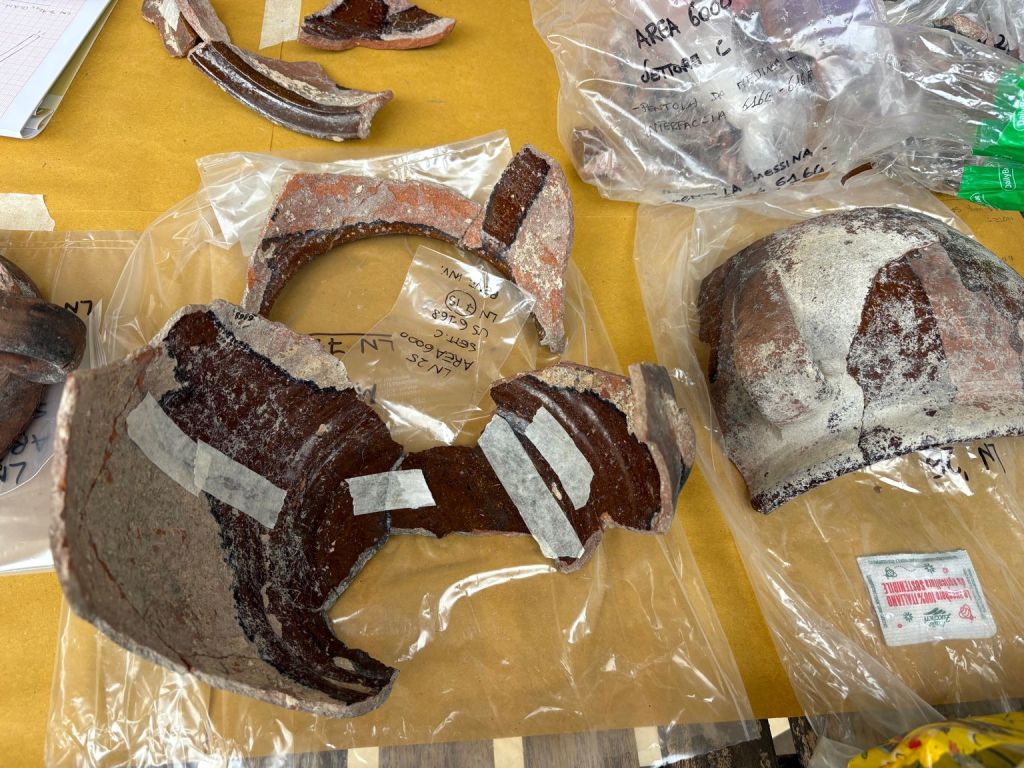
Pottery fragments.
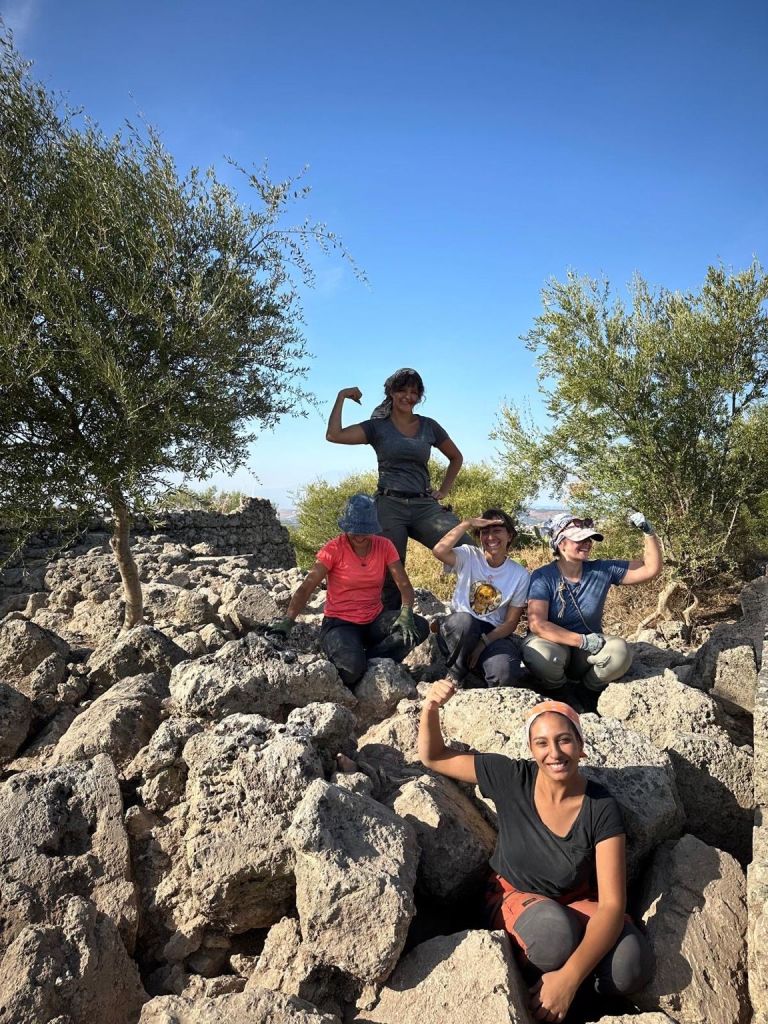
Kayla and the excavation team.
🌱 Read more about Kayla’s research
💻 Follow Kayla on LinkedIn and Instagram
And keep following AGRI-DRY on LinkedIn and Instagram for all the exciting science coming up!
 AGRI-DRY