Written by – Alexandra Vasilyeva
Following the AGRI-DRY Summer School in November, I stayed in South Africa for a few weeks to learn about local pollen types. It was a busy month of laboratory work and field work, with time also spent exploring the North-West University (NWU) Potchefstroom campus and the town.
Secondment recap. People (in order of appearance): Yolanda Makgale, Karabo Makgaretse, Alexandra Vasilyeva, Keamogetse Maijane, Reinier Terblanche. Video credit: Alexandra Vasilyeva.
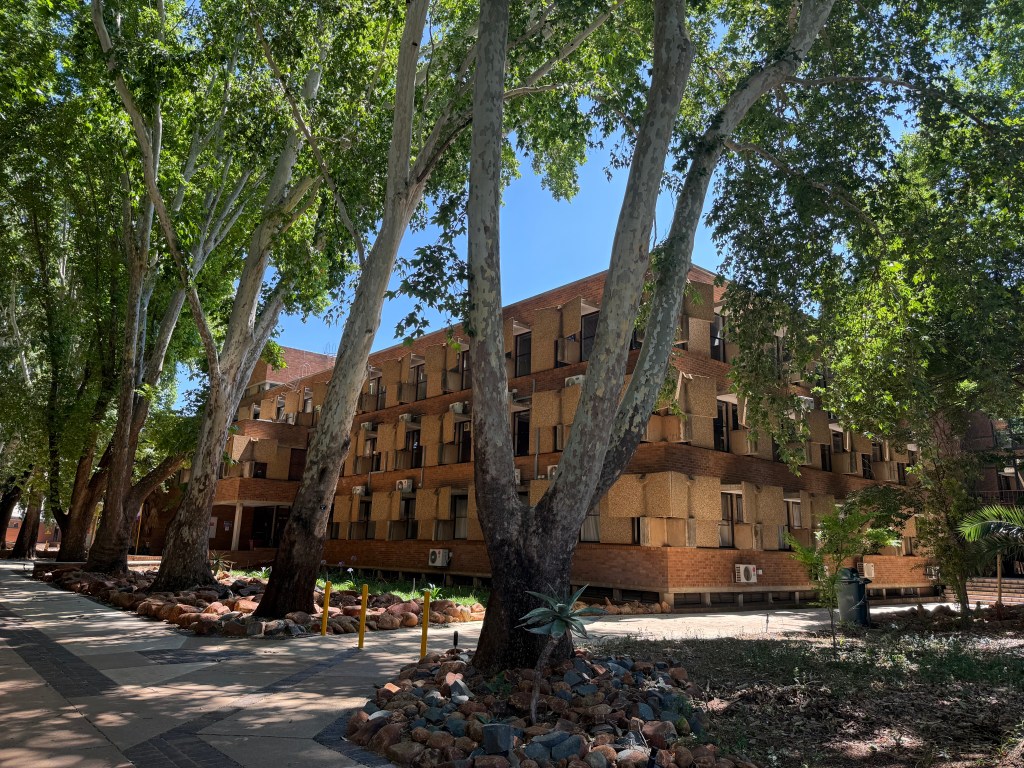
Exploring the NWU Campus, Potchefstroom. Photo credit: Alexandra Vasilyeva.
Having started with the pollen reference collection of the NWU, I then moved on to working with samples from a new peat core collected in September 2025. These pollen slides were rich in charcoal, detritus, and various fungi; however, pollen content varied greatly throughout the sequence – an issue common in pollen records from this part of South Africa.
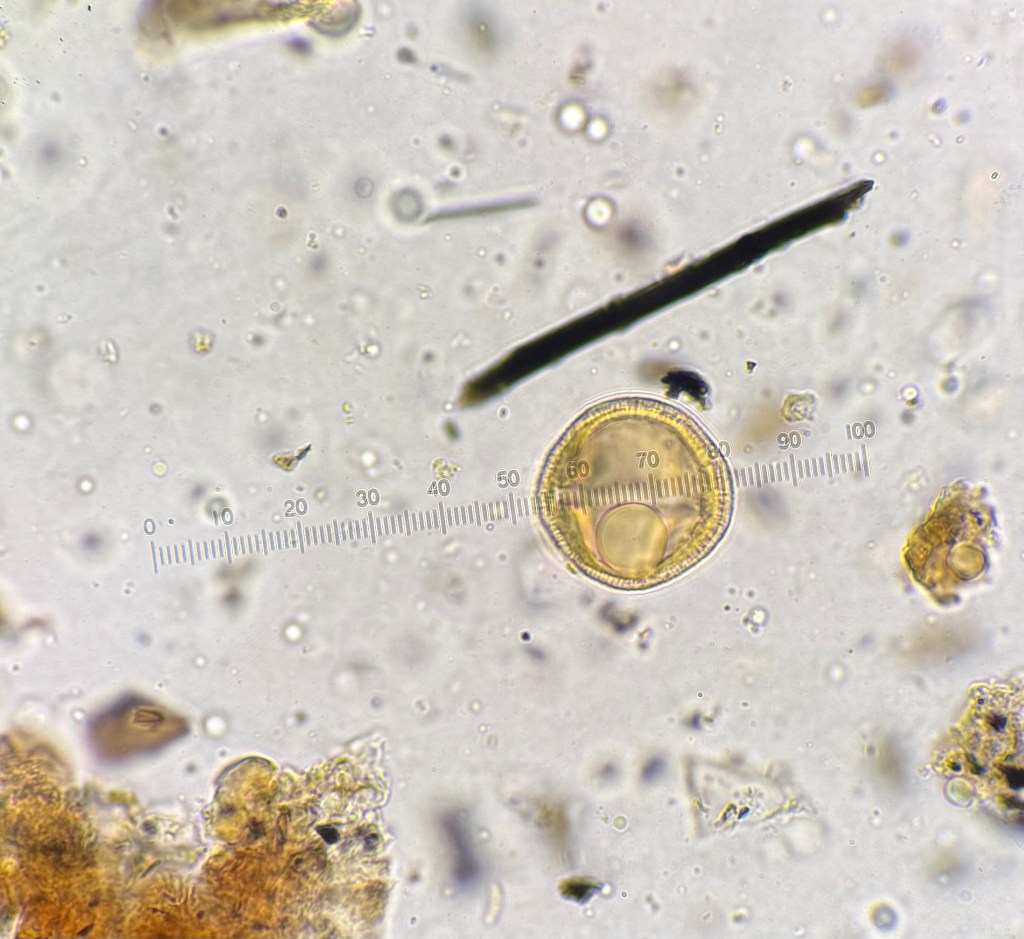
An Anthospermum pollen grain photographed with a phone camera. Photo credit: Alexandra Vasilyeva.
Working directly with your material and learning through hands-on experience can be even more valuable than using reference slides alone. However, arguably the most crucial component of training in palynology is discussing observations with supervisors and fellow students. In this respect, spending the month at the NWU pollen laboratory under Prof. Frank Neumann’s supervision was extremely important for me.

The NWU pollen lab team. Back row, left to right: Prof. Frank Neumann, Joe Malahlela. Front row, left to right: Keneilwe Podile, Alexandra Vasilyeva, Moteng Moseri, Boitumelo Langa, Keamogetse Maijane, Thokozani Mahlangu, Karabo Makgaretse. Photo credit: Makatu Mashanyu.
My stay, however, was not limited to laboratory work. The beginning of the summer season in South Africa provided an excellent opportunity to spend several days in the field collecting surface pollen samples and conducting vegetation surveys. Comparing pollen spectra with data on the actual presence of plants in the landscape helps researchers to better understand pollen–vegetation relationships. These relationships are also believed to have operated in the past, and such comparisons provide a robust basis for better interpretation of pollen records and more accurate reconstruction of past vegetation cover.
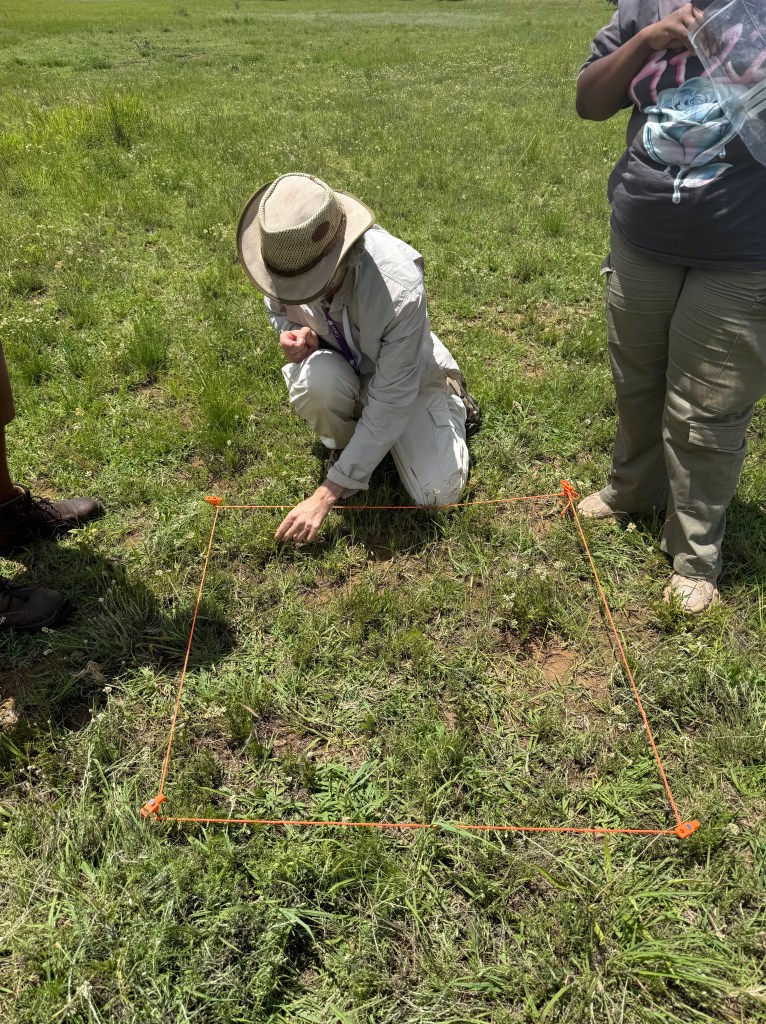
Prof. Frank Neumann examines a vegetation survey plot. Photo credit: Alexandra Vasilyeva.
Even though our team was focused on studying flora, we could not resist keeping an eye out for Africa’s exciting fauna.
Zebras and wildebeests at Inyala Game Lodge, one of the surveyed sites. Video credit: Alexandra Vasilyeva.
I thank the NWU pollen lab team and look forward to returning to continue working with surface samples.
👉 Read more about Alexandra’s research here.
🌱 Keep following AGRI-DRY on LinkedIn and Instagram for all the exciting science coming up!
This text was authored by Alexandra Vasilyeva and originally published on the University of Glasgow website.
 AGRI-DRY