Written by Thamary Mukuya & Mncedisi Taala
The first quarter of 2026 marked a milestone for the AGRI DRY team at the University of Botswana. Between March 14–21, we embarked on preliminary visits to Ngamiland and Chobe – an essential step before the data collection phase of our projects.
Immersing in Landscapes and Communities. Our journey was more than logistics. Meeting traditional leaders, agricultural extension officers, and community stakeholders gave us a glimpse into the lived realities shaping agriculture in northern Botswana. Walking through villages and engaging with local institutions reminded us that this project is not just about data – it is about people, heritage, and the environment that sustains them.
Interdisciplinary Insights. We were accompanied by three supervisors – Dr. Bothepha Mosetlhi (Environmental Sciences), Dr. Lokwalo Lekone (Archaeology), and Dr. Bongani Gumbo (History). Their diverse expertise enriched our perspectives, helping us interpret landscapes, histories, and farming systems through multiple disciplinary lenses.
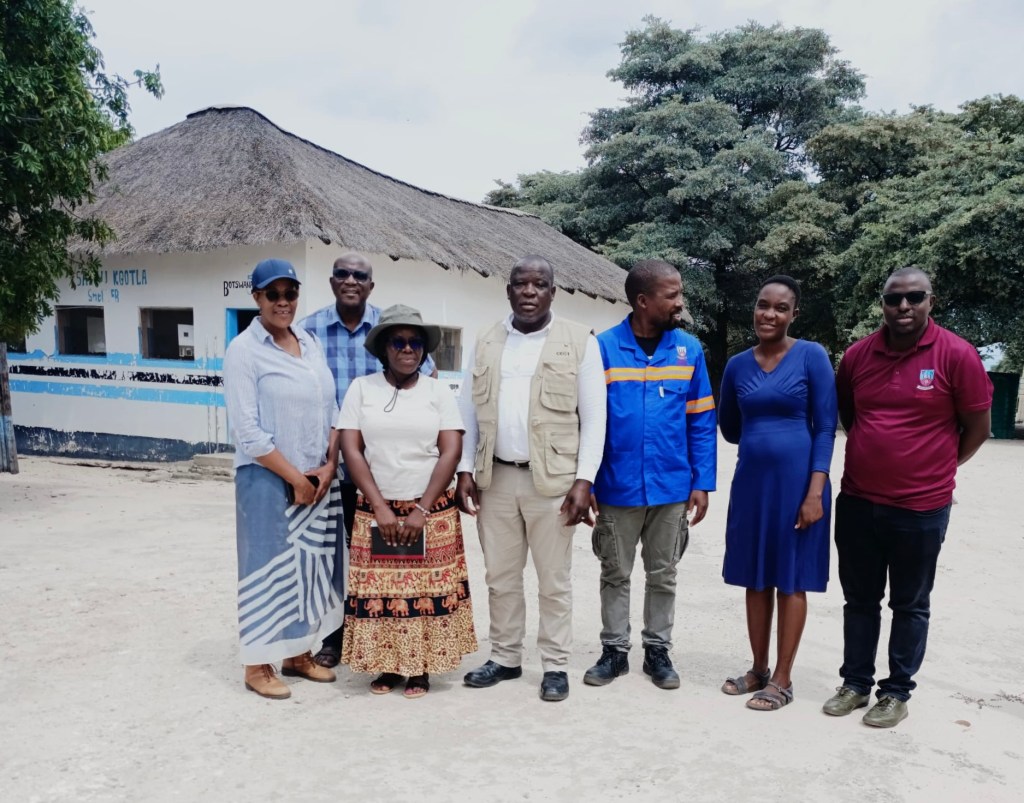
Doctoral Candidates, superviors, the Chief and his assistants, Satau Village.
A Region of Water, Wildlife, and World Heritage. Northern Botswana is a crossroads of cultural and natural (rivers and wildlife) heritage. We stood at the meeting point of four countries – Botswana, Namibia, Zambia, and Zimbabwe – where rivers sustain ecosystems and livelihoods. The region is also home to two UNESCO World Heritage Sites:
- Tsodilo Hills – a cultural treasure with millennia of human history of both the San communities and ancient farming communities
- Okavango Delta – a globally celebrated natural heritage site shaped by water and biodiversity
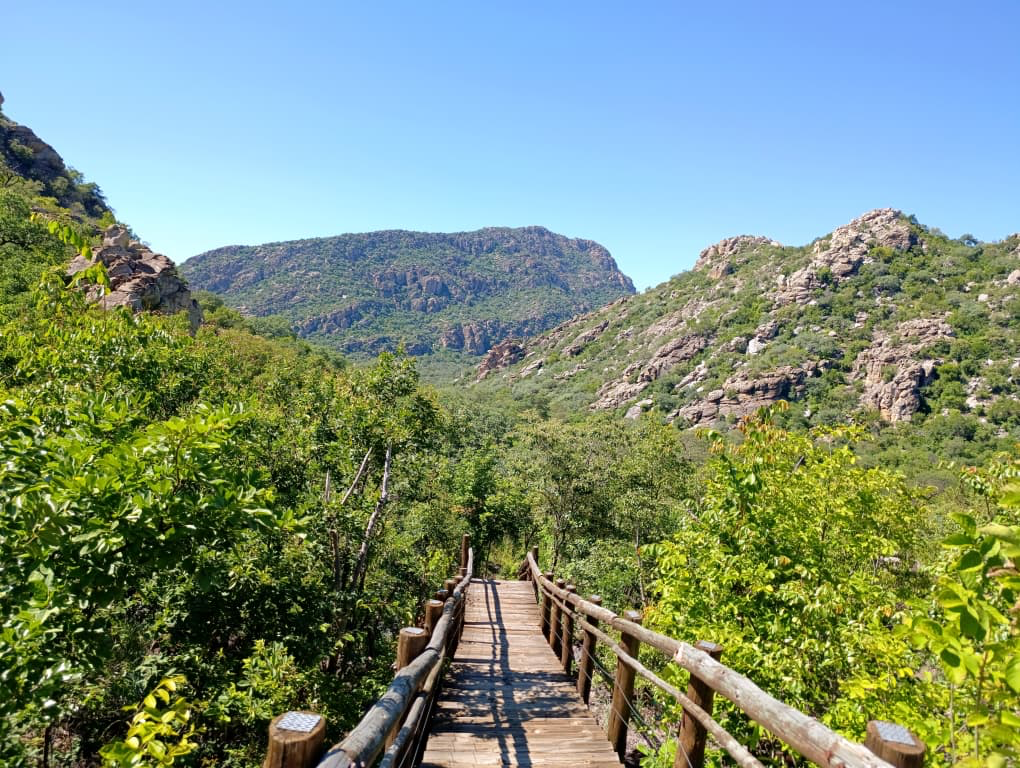
Tsodilo Hills, World Heritage Site. Photo credit: Thamary Mukuya.
For Thamary, visiting the N!oma archaeological site at Tsodilo Hills was especially meaningful, as sorghum seeds recovered there will form part of her doctoral study on crop evolution. For Mncedisi, the trip highlighted how rural communities engage with agricultural policies, an insight central to his research on smallholder agricultural practices and food security.
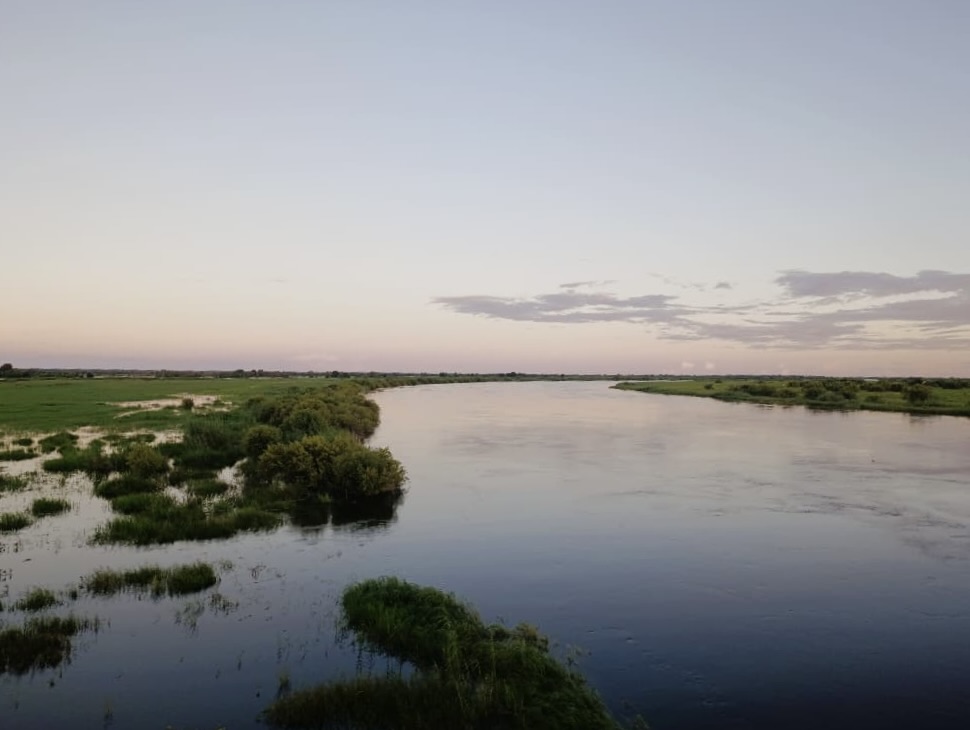
Okavango Delta. Photo credit: Thamary Mukuya.
Knowledge at the Okavango Research Institute. A highlight was visiting the Peter Smith University of Botswana Herbarium at the Okavango Research Institute. Its botanical collections will be invaluable for vegetation identification and paleoenvironmental reconstruction, supporting our research into past agricultural systems.
Agricultural Landscapes: Diversity in Practice. Chobe revealed striking contrasts between smallholder and commercial farms. Observing crops, engaging with farmers, and consulting extension officers provided grounded insights into how communities adapt to environmental variability and socio-economic pressures. These observations will shape our comparative analysis of agricultural evolution in Botswana.
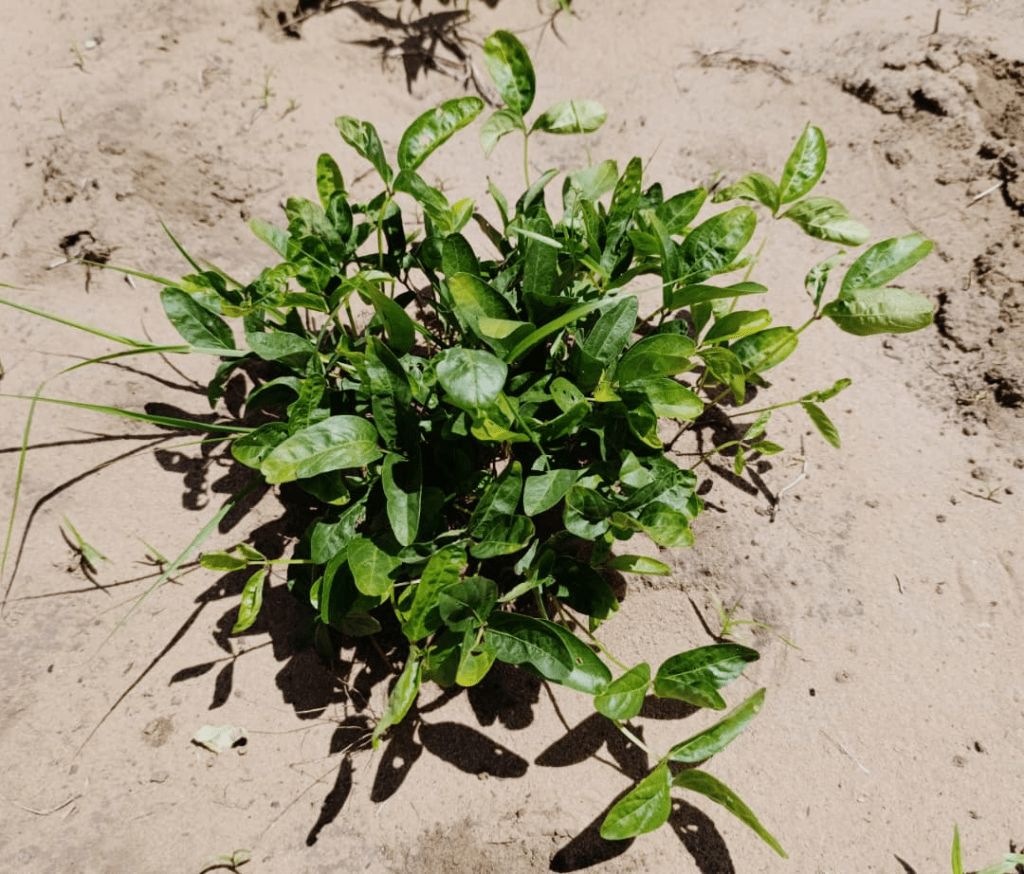
Bambara groundnut, one of the crops grown by smallholder farmers in the region. Photo credit: Thamary Mukuya.
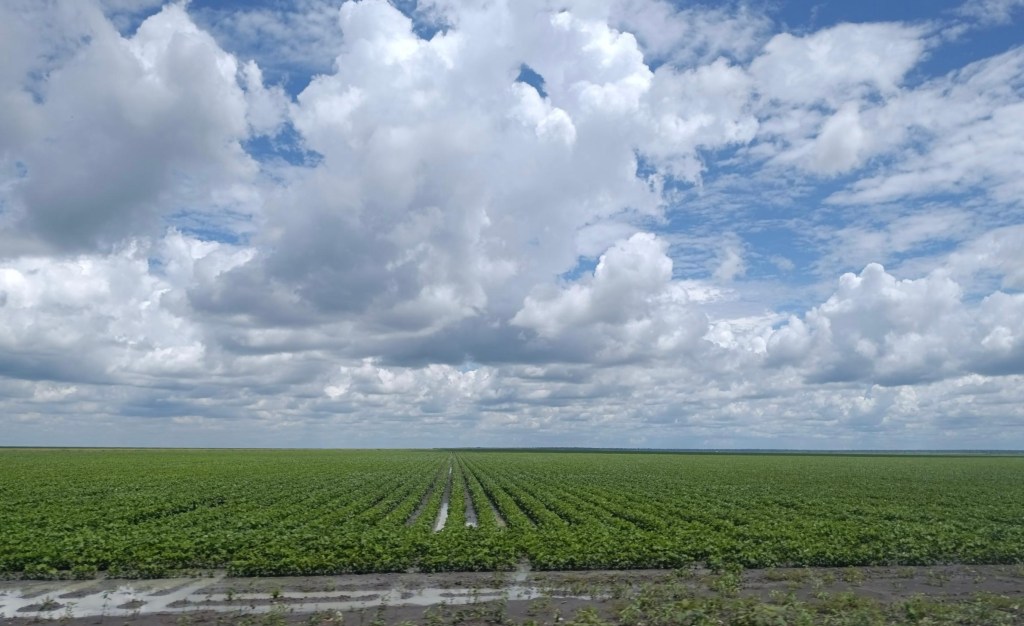
Field of sunflower, one of the key crops grown at a commecial level in the region. Photo credit: Thamary Mukuya.
Building Relationships. Meeting chiefs and extension officers underscored the importance of local governance and indigenous knowledge. These conversations will guide our data collection, ensuring it remains respectful, relevant, and rooted in community realities.
Looking Ahead. These visits were more than preparation; they were a reminder of the complexity and richness of northern Botswana. From ecological diversity to cultural heritage, from smallholder fields to commercial farms, the region offers a tapestry of stories waiting to be understood.
As we move into the data collection phase, we carry forward the insights, relationships, and inspiration gained from this journey. The work ahead is significant, but so is the opportunity to contribute meaningfully to knowledge on agriculture, environment, and heritage in Botswana and Southern Africa at large.
🌱 Keep following AGRI-DRY on LinkedIn and Instagram for all the exciting science coming up!
 AGRI-DRY