DC 8 – University of the Witwatersrand, South Africa
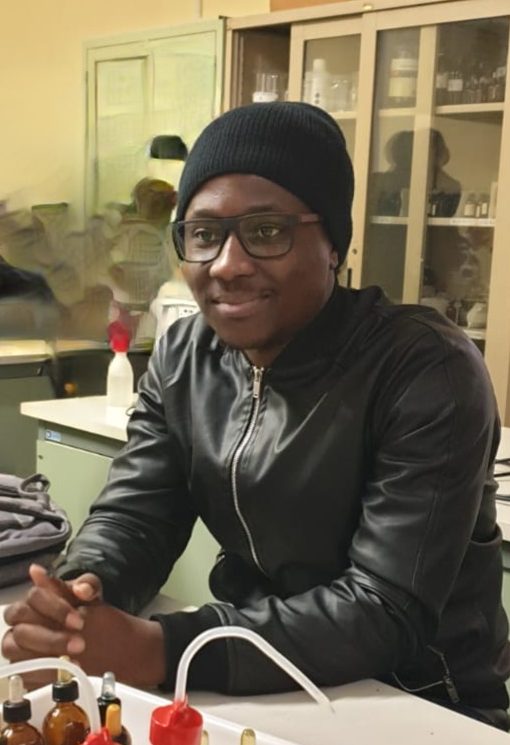
Tawanda is an Archaeologist who majors mainly in archaeological sciences. He did his undergraduate studies in Archaeology, Cultural Heritage and Museum Studies at the Midlands State University in Zimbabwe. His undergrad research focused on doing a preliminary documenting the archaeological sites in the area of Mukaro which in Masvingo province of Zimbabwe. He became an Erasmus Mundus ARCHMAT graduate in 2020. His final masters thesis focused on reconstruction of post medieval diet at Lagos in Portugal using stable isotopes from collagen. It was during his Erasmus Mundus Joint Masters program that he became much interested in archaeological sciences. Currently he is an AGRI-DRY Doctoral Candidate at both the University of the Witwatersrand in South Africa and the Universitat Pompeu Fabra in Spain.
AGRI-DRY Project:
Pre-Colonial food production in African communities
The project seeks to investigate the environmental conditions that existed in the last mellenium and how pre-colonial farming communities in the Nyanga Highlands, eastern Zimbabwe, responded to such conditions. Nyanga represents a unique archaeological and cultural landscape that provides insights into precolonial agricultural practices, environmental adaptation and socio-economic organisation in southern Africa. Much attention will be on Ziwa National Monument name that has been used by archaeologists to denote an earliest known farming community tradition that had its widest distribution in Northeastern Zimbabwe. The project seeks to reconstruct the dominant environmental conditions that existed during the last 1000 years, examine agricultural strategies such as terracing employed in response to environment, the impact that these strategies had on the physical and chemical properties of the soils. The project also seeks to identify the implications that Nyanga terracing had on the crops that were cultivated on them. Key comparisons will be made between pre-colonial farming approaches at Ziwa and those found elsewhere in Africa in particular at Bokoni (South Africa), Engaruka (Tanzania) and Konso (Ethiopia).
 AGRI-DRY