Written by Mncedisi Taala
One of the best parts of my AGRI-DRY PhD journey is fieldwork. My research involves spending time in rural communities, learning firsthand how smallholder farmers are keeping dryland agriculture alive. It is not just research; it is stepping into their world, listening to their stories, and seeing how traditions and practices shape how they grow crops today.
It is an adventure that lines up perfectly with my love for connecting with people and digging into what drives them, their purpose, their persistence, and their prowess. Of course, it hasn’t all been smooth sailing. But, as the saying goes, “Smooth seas never made skilled sailors.” And that is exactly what makes the journey worth it.
Navigating processes. From the very start, field-based research comes with its fair share of hoops to jump through. The planning phase alone involves multiple approval processes, each with its own level of scrutiny, and some take longer than expected. Once the green light finally comes, the next hurdle is sorting out the logistics of getting to the field. Luckily, I wasn’t navigating it alone. I teamed up with two other AGRI-DRY PhD candidates who share an interest in Eastern Botswana, and that collaboration made the journey a lot less daunting. Add to that the support from my supervisors and the administrative staff at the University of Botswana, and suddenly, the maze of procedures felt a little more manageable.
Managing community protocol. One of the tricky parts of field research is figuring out how to enter a community the right way. This is not just about showing up, you have to go through the proper channels, and that means following local protocols. Introducing yourself to the traditional authorities in a village is only one step. You also need to connect with government officials responsible for crop production, who hold valuable insights that can shape your study.
Thankfully, I had a head start from experience working in communities, so I knew how important it is to identify the right people to talk to, especially when gathering information about farmers for sampling. The real challenge is striking a balance between consulting government officials while also respecting the governance structures within each community. And here is the catch – it is never the same everywhere. Each village has its own way of doing things.
What is consistent, though, is that one wrong move can spark resistance. That is why I am grateful that my team and I have managed to get this right in every community we have worked with. It is a reminder that research is not just about data; it is also about relationships, respect, and knowing how to walk through the right doors.
Invaluable insights from traditional farmers. One of the most rewarding parts of my fieldwork has been listening to traditional farmers share their wisdom and insights passed down through generations, shaped by culture, belief systems, and the realities of life in Eastern Botswana. It is inspiring to see how they have adapted to the local environment and kept their practices alive. The Bobirwa region, where part of my research takes place, has relatively fertile soils and a favourable climate, compared to other parts of Botswana. These conditions influence not only the farming methods used but also the services farmers derive from their farming. It also informs the nature of government interventions required by farmers, thus enabling reflections on Botswana’s agricultural policy framework.
It has been fascinating to learn how farmers have developed skills to deal with challenges like pests and animal attacks, and how those strategies have evolved in response to shifting environmental trends, socio-cultural and economic dynamics. One of the most striking changes I have observed is in gender roles. Women have been increasingly stepping into greater responsibilities in farming, reshaping the way communities approach agriculture. These experiences have been more than just research. They have been lessons in resilience, adaptation, and the deep connection between people, nature, and tradition.
The journey continues. As I travel to new villages, I am eager to learn more about how smallholder farmers adapt to shifting environmental, cultural, and economic realities. Each community offers unique perspectives, providing insights to inform academic and project outputs. My focus is on drawing lessons from traditional dryland farming systems to uncover knowledge and inform policy that promotes resilient food production; the mission at the heart of the AGRI-DRY project.
What makes this journey even more meaningful is the collaboration. Working alongside doctoral candidates Sara Krubeck and Thamary Mukuya, and Gaofenngwe Mantswe (Research Assistant) has been a privilege. Every situation we face is met with fresh ideas, creative problem-solving, and the kind of teamwork that turns obstacles into opportunities. Looking ahead, I am not only anticipating research outcomes but also looking forward to the shared experiences, lessons learned, and collective wisdom that come from walking this path together.
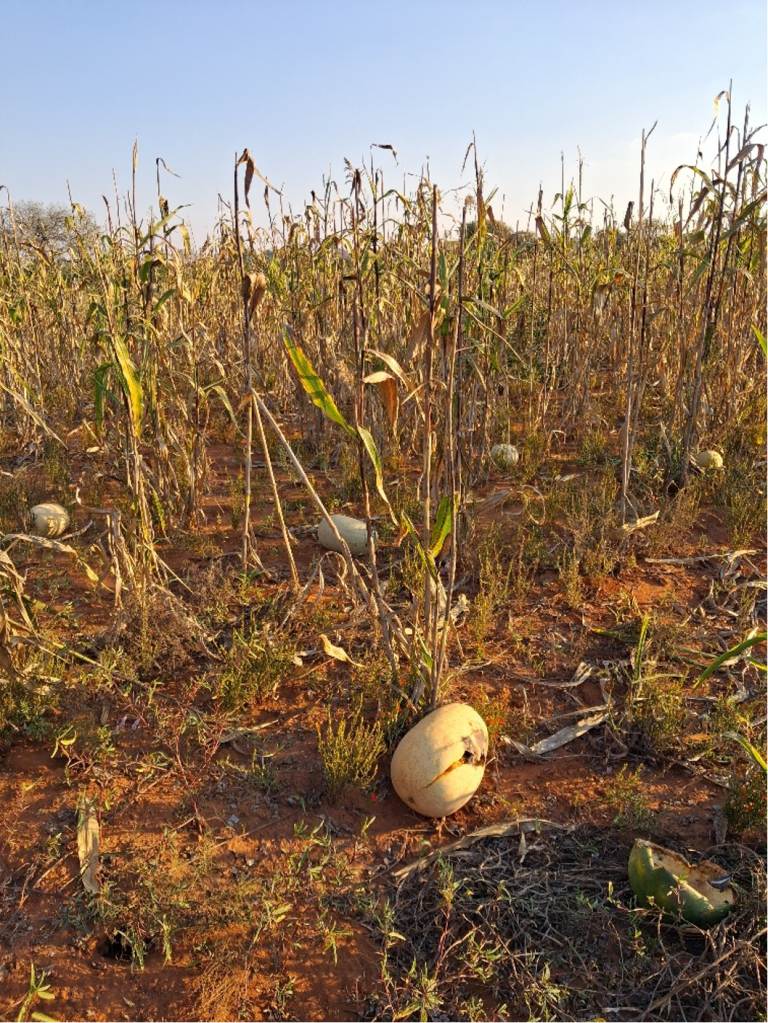
A recently harvested crop field where remains are left for feeding animals and to decompose into organic matter that will fertilise the soil.
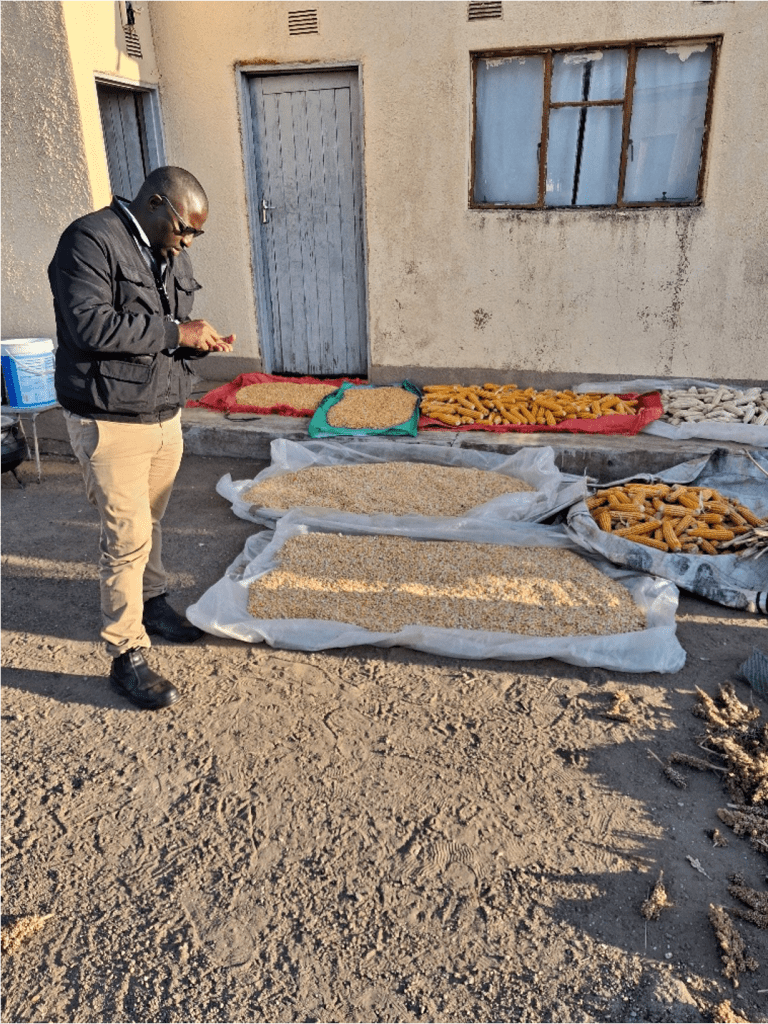
Mncedisi Taala having a closer look at some harvested crops placed in the sun for drying.
🌱 Keep following AGRI-DRY on LinkedIn and Instagram for all the exciting science coming up!
 AGRI-DRY